Pregnancy Diet in Australia: What to Eat and Daily Routine
A practical guide to pregnancy food choices, a sample day of meals, safe movement and everyday precautions—using Australian guidance, not a restrictive diet.
The short answer
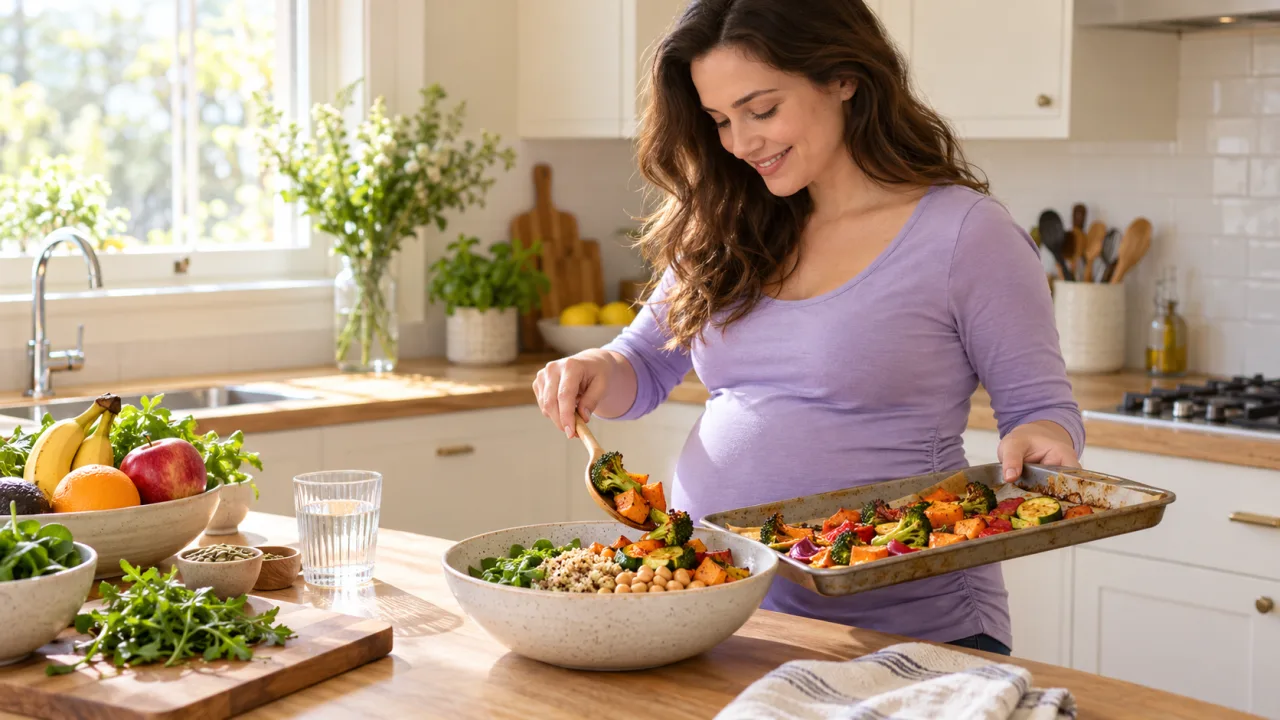
A pregnancy diet plan should support nourishment, not weight loss. Choose varied foods from the five food groups, follow pregnancy-specific food-safety advice, avoid alcohol and keep total caffeine within 200 mg a day. Discuss supplements and suitable activity with your maternity team. The meal and routine examples below are flexible starting points, not a personalised prescription.
Start with your maternity team, not a perfect plan
This guide is for adults looking for general pregnancy nutrition and lifestyle information, with Australia as the reference location. It cannot cover every pregnancy or replace antenatal appointments. Outside Australia, check your local maternity and food-safety advice: products, supplement recommendations and food risks can differ.
Ask for individual advice if you have gestational diabetes, significant vomiting, anaemia, food allergies, an eating-disorder history, a multiple pregnancy or another health condition. A midwife, doctor and Accredited Practising Dietitian can help adapt meals without unnecessary restriction. You do not have to manage difficult symptoms by willpower.
For urgent symptoms, use the “When to get help” section rather than trying to fix the problem with a meal, supplement or calculator. Do not stop prescribed medicines without speaking to your clinician.
What should you eat during pregnancy?
Build variety across the five food groups. These are food ideas, not portions that guarantee adequate nutrition; amounts depend on your circumstances. Use pregnancy-safe preparation for each ingredient.
Keep water available through the day. Fluid needs change with heat, activity, vomiting and medical conditions, so ask your maternity team what is appropriate rather than forcing a fixed litres-per-kilogram target.
| Food group | Practical choices |
|---|---|
| Vegetables and legumes | Freshly washed or cooked vegetables; cooked beans and lentils. |
| Fruit | Whole fruit washed before cutting or eating. |
| Grain foods | Oats, wholegrain bread, rice and other cereals; include higher-fibre options. |
| Protein foods | Thoroughly cooked eggs, poultry, meat or suitable fish; cooked tofu, beans, nuts and seeds if tolerated. |
| Dairy or suitable alternatives | Pasteurised milk or yoghurt; discuss calcium-fortified alternatives if avoiding dairy. |
Do you need to eat for two or count calories?
Pregnancy increases some nutrient needs, but “eating for two” does not mean doubling your food. Energy needs vary with pregnancy stage, activity and your starting point. Australian guidance emphasises nutrient-dense choices and advises against trying to lose weight during pregnancy.
There is no single calorie target in this article. Do not use a general weight-loss, BMI, macro or weight-goal timeline calculator to prescribe pregnancy intake or weight gain. Ask your maternity team to interpret your growth and weight pattern in context; a daily scale change is not a verdict on your pregnancy.
Important nutrients and supplements to discuss
Food and supplements have different jobs. Check your prenatal product with a pharmacist or maternity clinician, including the total from any overlapping products. More is not automatically better, and a prenatal tablet does not replace meals.
| Nutrient | What to discuss with your clinician |
|---|---|
| Folic acid | Australian public guidance describes 400–500 micrograms daily before conception and during the first three months. Some people need a prescribed higher dose; do not select that dose yourself. |
| Iodine | NHMRC recommends a 150-microgram daily supplement when planning pregnancy, during pregnancy and while breastfeeding. Get medical advice first if you have a thyroid condition. |
| Iron | Discuss food sources and blood-test results. Extra iron may be recommended for deficiency or anaemia; do not assume everyone needs a high-dose iron product. |
| Vitamin D, calcium and B12 | Ask about your diet and deficiency risks, especially with vegan or restricted diets. Supplement choices need individual assessment. |
A sample day of pregnancy meals—not a complete prescription
This original meal outline shows how to organise familiar foods. It has not been calculated to meet every nutrient requirement, and it does not specify your energy or portion needs. Swap foods for your culture, budget, allergies and appetite; a dietitian can turn an outline into an individual plan.
| Eating occasion | Flexible idea |
|---|---|
| Breakfast | Oats made with pasteurised milk or a suitable fortified alternative, plus washed berries or a banana. |
| Morning snack, if wanted | Pasteurised yoghurt and fruit, or wholegrain toast. |
| Lunch | Freshly cooked lentil and vegetable stew with rice; or thoroughly cooked chicken with wholegrains and cooked vegetables. |
| Afternoon snack, if wanted | A handful of unsalted nuts if tolerated, or crackers with pasteurised hard cheese. |
| Dinner | Thoroughly cooked salmon or tofu with potato and vegetables. Choose fish within the mercury guidance below. |
| If hungry later | An additional snack or smaller meal that you tolerate; do not treat this outline as a limit. |
Foods to avoid or handle differently in Australia
Pregnancy changes the consequences of some foodborne infections. Preparation and storage matter as much as the ingredient name. This is a shortlist, not an exhaustive safety checker: use the NSW Food Authority’s detailed food table in source 5 for a specific product.
| Food or situation | Practical precaution |
|---|---|
| Raw or undercooked meat, seafood and eggs | Choose thoroughly cooked food, served hot. Avoid foods made with raw egg. |
| Unpasteurised dairy and higher-risk soft cheeses | Choose pasteurised milk, yoghurt and hard cheese; check the official table for other cheese types and cooking conditions. |
| Cold deli meats and refrigerated pâté | Avoid cold ready-to-eat meats; processed meats need thorough heating and prompt eating according to the official food table. |
| Pre-packed salads, raw sprouts and rockmelon | Choose freshly prepared, washed produce and lower-risk alternatives. |
| Hummus and tahini | NSW pregnancy guidance advises avoiding both store-bought and homemade versions. |
| Chilled ready-to-eat seafood and sushi | Choose freshly, thoroughly cooked alternatives rather than assuming refrigeration removes the risk. |
Can you eat fish while pregnant?
You do not need to avoid all fish. Choose thoroughly cooked options, check the species, and use FSANZ’s Australian mercury advice rather than treating every type of fish as interchangeable.
For pregnant people or those planning pregnancy, the FSANZ advisory uses a 150 g portion: orange roughy or catfish is limited to one portion per week with no other fish that week; shark/flake or billfish such as swordfish and marlin is limited to one portion per fortnight with no other fish that fortnight. This mercury portion is different from a dietary-guideline food-group serve. Ask the seller if the species is unclear.
Caffeine, alcohol and other things not to start
Australian pregnancy guidance recommends no more than 200 mg of caffeine a day from all sources combined. Coffee strength and serving size vary, so “two cups” is not a reliable allowance. Include tea, cola, chocolate, energy products and any caffeine-containing medicines; check labels and ask a pharmacist about medicines.
Avoid alcohol during pregnancy. Avoid smoking and vaping, and ask your maternity team for help if stopping is difficult. Do not assume herbal remedies, detox teas or supplements are safe because they are marketed as natural. Check them before use, and do not stop prescribed medicines on your own.
Prepare and store meals safely
Use this checklist when preparing and storing meals. For a specific food or product, check the official pregnancy food-safety guidance linked below.
- Wash hands, utensils and produce; keep raw meat separate from ready-to-eat food.
- Keep the fridge below 5°C and refrigerate perishable food promptly. Do not eat chilled food that has been left out for two hours or more.
- Prefer fresh meals. Pregnancy-specific NSW guidance says refrigerated leftovers should be kept no longer than a day; generic three-day leftover advice is not the pregnancy rule.
- Reheat thoroughly until steaming hot throughout. Pregnancy, Birth and Baby advises at least 75°C; use a food thermometer and follow any stricter product-specific cooking instructions.
- Check use-by dates. A nutrition label, recipe photo or normal smell cannot certify food safety.
A flexible pregnancy daily routine
Use this original routine as a prompt, not a timetable you must complete. Antenatal care, symptoms, work and caring responsibilities come first. Rest days and changing plans are normal.
| Part of the day | Possible routine |
|---|---|
| Morning | Have a meal you tolerate, drink water and take only the supplements or medicines agreed with your clinician. Check appointments and questions you want to raise. |
| During work or daily tasks | Break up long periods sitting or standing still. If activity is suitable for you, take a short comfortable walk rather than chasing a step target. |
| Midday | Eat a freshly prepared meal. Keep perishable food cold until needed, and allow time to rest. |
| Afternoon | Choose a snack if hungry and drink regularly. Fit in comfortable movement only if you feel well and it is appropriate for your pregnancy. |
| Evening and sleep | Eat, wind down and prepare for rest. From 28 weeks, settle to sleep on either side, including naps; if you wake on your back, calmly roll onto your side. |
How much exercise is appropriate during pregnancy?
For an uncomplicated pregnancy, Australian guidance recommends working towards 150–300 minutes of moderate activity weekly and muscle-strengthening activity on at least two days. Walking, swimming, stationary cycling and suitable light resistance work can be options. Moderate effort should still let you hold a conversation. Get advice about your own starting point, especially with complications.
For someone already able to tolerate it and cleared for activity, five 30-minute walks is one way to reach 150 minutes—not an immediate goal for an inactive beginner. You can start with shorter bouts and build gradually. A maternity clinician or appropriately qualified prenatal professional can guide strength work and pelvic-floor technique.
Do not automatically follow Vitalo’s general beginner or women’s gym plan while pregnant. Those plans are not prenatal programmes. Existing vigorous exercise and any planned changes need individual discussion; pregnancy is not the time to begin a new vigorous routine without guidance.
Activity do’s and don’ts
Use these precautions alongside advice from your maternity team. Adapt activity to your pregnancy and follow any individual restrictions you have been given.
- Tell your instructor you are pregnant. Warm up, cool down, drink regularly and use a comfortable pace.
- Avoid contact sports, activities with a high risk of falling, scuba diving and overheating, including hot yoga. Do not use this article to programme heavy lifting or maximal efforts.
- Adapt positions as pregnancy progresses. Avoid prolonged flat-on-your-back exercise later in pregnancy; stop and change position if dizzy or uncomfortable.
- Stop exercise if it causes pain, unusual breathlessness, dizziness, bleeding, fluid leakage or other concerning symptoms, and contact your maternity team promptly. Do not push through a warning sign to complete a target.
Adapt the routine as symptoms and pregnancy change
Early pregnancy: nausea and food aversions may make smaller, more frequent meals easier than large meals. Try simple foods you tolerate, sip drinks and rest. This is not a test of healthy-eating perfection. If vomiting prevents you keeping food or fluids down, urine becomes very dark or infrequent, or you are losing weight, contact your care team promptly rather than waiting for a diet plan to work.
Later pregnancy: appetite, comfort and movement may change. Ask about reflux, constipation, pelvic pain or persistent fatigue instead of assuming they must be tolerated. Adjust meal size and activity with your team; a trimester does not automatically trigger a fixed calorie target or a harder workout.
From 28 weeks, remember side-settling for every sleep. Once you know your baby’s usual movement pattern, report reduced or changed movements immediately—do not wait until the next day or rely on an app for reassurance.
When to get help—not another calculator result
Contact your midwife, doctor or hospital maternity unit immediately for vaginal bleeding, severe abdominal pain, fluid leakage, a persistent severe headache, visual changes, sudden swelling, fainting or concerns about your baby’s movements. Stop activity while seeking advice. Reduced movements need immediate assessment; do not wait overnight.
For severe chest pain, severe difficulty breathing, collapse or another medical emergency, call the local emergency number; in Australia, call 000. Persistent vomiting or signs of dehydration also need prompt clinical assessment. This list is not exhaustive: if something feels wrong, contact your maternity team.
Use the kitchen converter for measurements—not pregnancy portions
Vitalo’s Meal Portion Converter can convert compatible kitchen units such as grams to ounces or millilitres to litres. It does not tell you how much to eat in pregnancy. Its cup option is a US cup, not an Australian metric cup; use the recipe’s stated millilitres or grams when that distinction matters.
Use recipe nutrition estimates only when they help
The Recipe Nutrition Calculator divides nutrition totals you supply by the number of servings. It can help you discuss a familiar meal with a dietitian, but it does not check food safety, calculate prenatal micronutrient adequacy or decide your daily requirements. It is not a gestational-diabetes treatment tool, and you can skip nutrition tracking if it is unhelpful or distressing.
The caffeine cutoff tool estimates timing, not pregnancy safety or total daily intake. General calorie, macro, protein, BMI, body-fat, weight-loss and heart-rate-zone calculators are not a replacement for pregnancy-specific assessment. No tool can confirm your baby is well.
How this guide was prepared
Prepared by Vitalo Editorial using the official sources linked below, checked on 26 October 2026. Australian guidance leads the nutrition and food-safety sections; NHS and HSE information adds practical activity and medicines context. The meal and routine tables are Vitalo examples, not validated clinical plans. Source publication dates differ; an older date alone does not mean a recommendation has been withdrawn.
This is general editorial education, not a clinical prescription or an endorsement by the organisations cited. Your own maternity team’s advice takes priority. Discuss changes to your food, supplements or activity with them, and keep attending antenatal appointments.
Put it into practice
A useful next step
Frequently asked questions
Is this a weight-loss pregnancy diet plan?
No. Australian Eat for Health guidance advises against trying to lose weight during pregnancy. This guide offers food ideas and safety information, not an energy deficit. Discuss individual intake and weight gain with your maternity team. See source 1.
Can I drink coffee while pregnant?
Australian pregnancy guidance recommends no more than 200 mg of caffeine daily from all sources combined. Amounts vary by product, serving size and brewing method. Count tea, cola, chocolate and caffeine-containing medicines too; a cutoff-time calculator is not a pregnancy safety check. See source 7.
Can a vegetarian or vegan pregnancy diet work?
Food choices need to cover pregnancy requirements, including nutrients that can be harder to obtain with restricted diets. Ask an Accredited Practising Dietitian and your maternity clinician about protein foods, iron, iodine, calcium, vitamin D and B12, and any supplements needed. See sources 2–4.
Is the sample meal day enough for every trimester?
No. It is an illustrative meal pattern without calculated energy or nutrient totals. Your portions, extra food, supplements and symptom management need individual assessment. It is not a treatment plan for gestational diabetes, severe vomiting or other complications.
Can I start Vitalo’s women’s gym plan during pregnancy?
Do not assume a general women’s plan is a prenatal programme. Discuss appropriate activity with your maternity team. If you are new to exercise, start gradually rather than adopting a vigorous routine. See sources 9–11.
What if my baby is moving less than usual?
Contact your midwife, hospital maternity unit or doctor immediately. Do not wait until the next day or use food, a home monitor or an app to reassure yourself. If you cannot reach your team, attend a hospital maternity or emergency unit. See source 16.
Sources & further reading
- 1.Australian Government Eat for Health — healthy eating when pregnant or breastfeeding
- 2.Pregnancy, Birth and Baby (Healthdirect Australia) — healthy diet during pregnancy
- 3.Pregnancy, Birth and Baby — vitamins and supplements during pregnancy
- 4.NHMRC — iodine supplementation for pregnant and breastfeeding women (current recommendation)
- 5.NSW Food Authority — foods to eat or avoid when pregnant
- 6.Food Standards Australia New Zealand — mercury in fish (Australian portion guidance)
- 7.Pregnancy, Birth and Baby — caffeine during pregnancy and breastfeeding
- 8.Pregnancy, Birth and Baby — things to avoid during pregnancy
- 9.Australian Government — recommendations for physical activity in pregnancy (2026)
- 10.NHS — exercise in pregnancy: gradual starts and later-pregnancy adaptations
- 11.Ireland Health Service Executive — safe exercise and warning signs in pregnancy
- 12.Australian Commission on Safety and Quality in Health Care — Stillbirth Clinical Care Standard, sleep position
- 13.NSW Agency for Clinical Innovation — nausea and vomiting in pregnancy
- 14.Healthdirect Australia — warning signs during pregnancy
- 15.NHS — medicines and herbal remedies in pregnancy
- 16.Pregnancy, Birth and Baby — baby movements and when to seek immediate help
- 17.NSW Food Authority — pregnancy food safety and pregnancy-specific leftover storage
About the author
Vitalo Editorial
Vitalo Editorial creates practical guides to food, habits, and body measurements. Articles connect published health resources with worked examples and Vitalo tools. These guides provide general education; individual articles name a clinical reviewer only when an actual qualified review has taken place.
Read our editorial policy →